 My personal reading slowed down during the month of December as I faced the end of a busy semester. The book I selected from my TBR list (that stands for “To Be Read” in case you aren’t familiar with the acronym) was Amy Silverstein’s My Glory Was I Had Such Friends. I had first heard of the memoir late in the summer and I thought it would be a celebration of friendship — something to read as I was going into the holidays. I did not expect that I would respond so emotionally to the book and experience moments where I didn’t know if I would be able to finish or not.
Amy Silverstein is a heart-transplant survivor. She first faced life as a transplant patient as a 25-year-old woman. Given a life expectancy of 10 years, Amy has defied the odds as she has made a successful life for herself. Now at the age of 50, Amy and her husband Scott face the reality that her time with her heart is running out and Amy needs a second transplant. The couple leaves their NYC home and head for Los Angeles to be treated at Cedars Hospital.
Amy’s girlfriends cannot bear the thought that Amy and Scott will have to face this challenge alone. So they create a spreadsheet calendar and begin signing up for when they will join the couple in California and offer moral support and encouragement. These visits are the heart of My Glory Was That I Had Such Friends.
Amy’s love for her friends is apparent as each pair remembers the happy times they have spent together — raising children, falling in love with their husbands, and simply living life. As Amy’s health declines and the chances for a second transplant diminish, each friend finds herself at a difficult crossroads: Does she allow her personal desire to keep Amy alive as long as possible outweigh her friend’s right to determine for herself when “enough is enough”? It is a moral and ethical dilemma that each woman must confront and figure out how to deal with the ultimate choice between life and death.
Silverstein’s descriptions of her illness are jarring throughout the memoir. With each biopsy, burning injection, and firing of her newly inserted pacemaker, the reader experiences the pain firsthand. Living in a family where heart complications have been par for the course recently, I found these passages especially difficult to read. I wept in sympathy with Amy’s friends as she finally reached the decision that she would give up the fight of her life when her 30 days on the highest-need transplant list came to an end. I rejoiced around Amy’s bed as she and her friends received the news that a matching heart had been found and was en route from Nevada. I wrung my hands with them as they waited for updates of the procedure’s progress.
My Glory Was I Had Such Friends will not be a great read for everyone. At times difficult to think about, at times heartwarming, and at times heartbreaking, the memoir is one that reminds us of the importance of surrounding ourselves with friends that can weather good times and bad. For those who choose to read Silverstein’s words, they will be a reminder of the importance to always be thankful for the friends that fill your life and treasure each moment with them.

 I’ve been trying to write this review all week, but things have been so busy that I simply haven’t been able to get around to it until now. I finished reading A Time to Stand late Sunday night on my return trip from a visit home for the Thanksgiving holiday. While I don’t read a lot of Christian fiction these days, Robert Whitlow’s novels continue to be some of my favorites in the genre because they are always engaging and thought-provoking.
 I’m almost finished with this series….I’m almost finished with this series……That seemed to be my mantra as I read 15th Affair. This time, Lindsey and her friends find themselves facing a Chinese spy ring, an exploding aircraft, and missing corpses. Just another typical day in the lives of the Women’s Murder Club. To make matters worse, Lindsey’s husband, Joe, has left without a trace. Is Joe dead? Or has he run away with another woman?
 While flying home yesterday, I decided to take a departure from my normal novels and investigate a topic that I personally find extremely important and that has arisen in several conversations this week. Scott M. Gibson’s Should We Use Some Else’s Sermon?: Preaching in a Cut-and-Paste World examines the history of plagiarism in the Church’s pulpits and focuses specifically on the responsible use of easily available sermon websites such as sermoncentral.com.
  I returned to my Library Shelf project with Dorothy Simpson’s Doomed to Die. This mystery novel featuring Inspector Luke Thanet was another quick read, but definitely had a convoluted plot line. The twists and turns were unexpected and were not adequately prepared; this reader felt as though he was on a constant roller coaster ride through the novel’s pages.
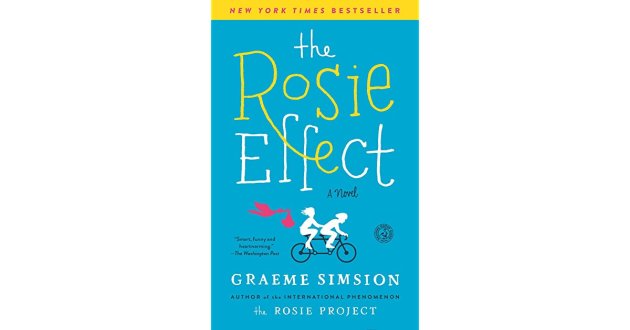 I returned to My Library Shelf project and read The Rosie Effect, the sequel to The Rosie Project. While I really enjoyed the first novel, The Rosie Effect left something to be desired. In the sequel, Rosie and Don are married and living in New York City. When Rosie finds herself pregnant, she begins to doubt if Don will be a suitable father given his “uniqueness” due to his obsessive personality. Don finds himself fighting for his future child as well as his marriage.
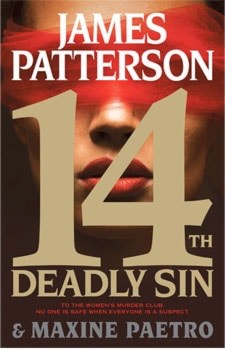 I am getting closer and closer to being current with the Women’s Murder Club series and I am looking forward to settling into a slower pace of reading these Patterson novels. Having said that, I must admit that I thoroughly enjoyed 14th Deadly Sin. In this installment, Lindsey and the SFPD are plagued by a string of robberies and murders that are being committed by a band of masked bandits wearing police windbreakers. Who can be trusted if police officers are now committing crimes against the citizens of San Francisco?
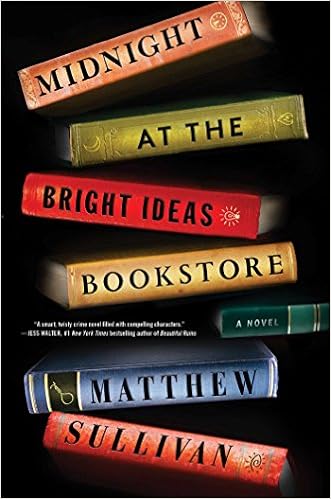 My latest novel took me to a used bookstore that is a home-away-from-home for its quirky employees and eccentric patrons. The book’s opening scene features Joey, one of Bright Ideas’ most regular customers, dangling from a noose. His body has been discovered by Lydia, the lovable and loyal bookseller. As Lydia lower Joey’s body from the rafters, she discovers a photograph in Joey’s pocket. Is this a clue to the reason for Joey’s suicide? No….it actually raises more questions because the picture was taken at Lydia’s 10th birthday party — and was one of the last times she saw her friend Carol before she was tragically killed. Why does Joey have this picture? He and Lydia first met a few years ago…..long after her birthday celebration.
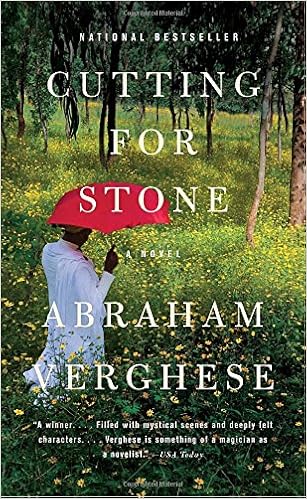 utting for Stone can only be described as a lush novel filled with rich language and mesmerizing characters. Narrated by Marion Stone, the twin brother of Shiva, the story follows Marion and Shiva’s relationship from its earliest beginnings in Ethiopia to its conclusion on the East Coast of the United States. Together, the twins experience many ups and downs as they struggle with issues related to love and personal identity while dealing with their own feelings of abandonment.
