Reading for Me

The Books I Have Read…..Just for Me

The Long January is Over (February 3, 2025)

Was it just me or did it feel as though January started about 3 months ago? Maybe that explains why it has been such a good month for my reading life. This week saw a 5 star read and a classic American novel that I’ve always avoided finally making its way into my reading stack — although I don’t know why I was frightened now that I’ve started reading it.

What I Finished This Week
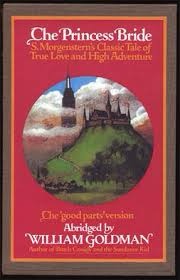
The Princess Bride by William Golden. This book was my final book for my January goals for The 52 Book Club 2025 Challenge. I was using it to fulfill the “Adventure story” challenge (prompt #38). Having seen bits and pieces of the movie based on the novel, I found myself visualizing many of the key scenes of the book and smiling along the way. However, I also found myself confused and just ready for the book to end. The final 100 pages of the novel were especially unsatisfying to me. I don’t think I’ve ever said this before — but watch the movie and just skip the book. 2.75 stars.

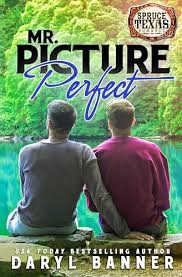
Mr. Picture Perfect by Daryl Banner. I’m not going to bore you with a plot synopsis because that suggests that I somewhat recommend the book. While it had some cute moments and I thought that having a character that might be on the spectrum as a leading man in a romance was interesting, this book isn’t going to be a good fit for most readers. It was my end of the month audiobook, so I listened through to the end. 2 stars.

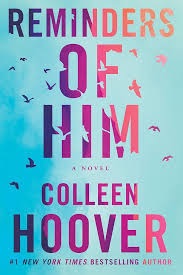
Reminders of Him by Colleen Hoover. I cannot sing this novel’s praises enough! What an absolutely incredible book! Reminders of Him had been stashed in my Kindle library for quite a while, but I never got around to picking it up. Now I’m kicking myself for waiting so long. Although it is only early February, I anticipate this novel will contend for the best book of 2025.

What’s the book about, you ask? Kenna has served 5 years in prison for the death of her boyfriend, Scotty. It was actually a car accident. But Kenna was driving the car….and she left Scotty alone. At the time of the accident and through the trial, Kenna didn’t know that she was pregnant. Once she gave birth early in her sentence, the pre-mature child was taken from her immediately to be raised by Scotty’s parents. Now that Kenna has been released, she returns to the scene of the crime in the hopes of obtaining forgiveness and connecting with the daughter she has never met. Although I haven’t read many of Hoover’s novels, I have enjoyed all that I have experienced so far. Reminders of Him had me laughing and sobbing as I explored ideas of grief, forgiveness, and loss with an amazingly lovable cast of characters. 5 stars!

What I’m Currently Reading

Finding Mr. Write by Kelley Armstrong (p. 72 of 357). February is here and it is time to begin reading more books to fulfill prompts of the 2025 challenge. I borrowed this book from my local library to read for the “Pun in the Title” challenge (prompt #1). I’m not very far into the book, but I’m finding it really cute so far.

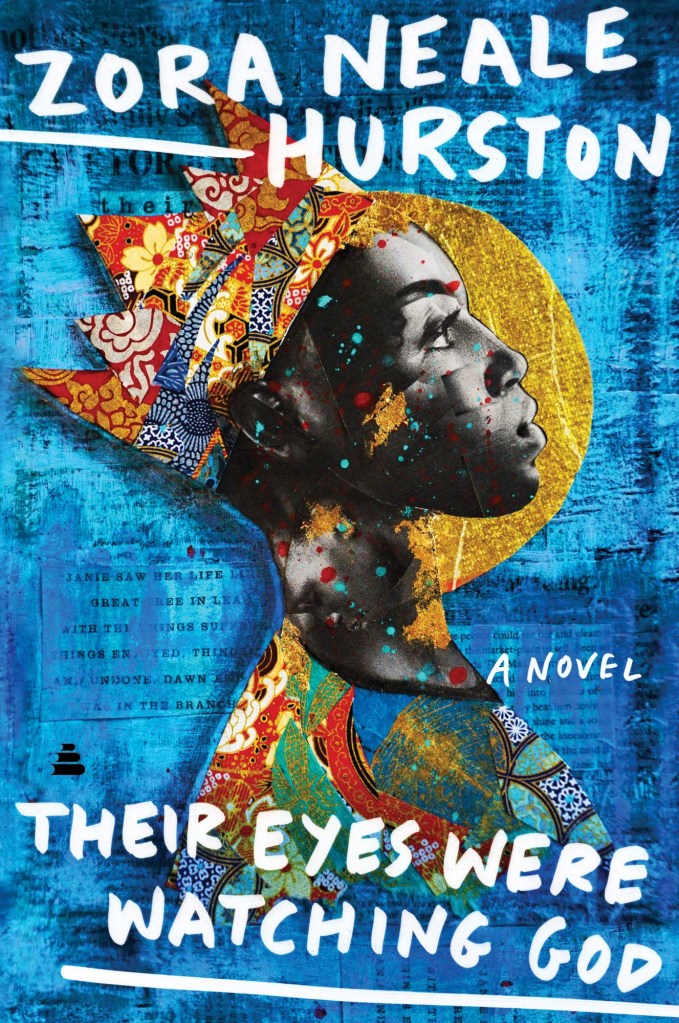
Their Eyes Were Watching God by Zora Neale Hurston (p. 43 of 227). As though the 2025 challenge wasn’t going to keep me busy enough, I found myself sucked into the February mini challenge too! This Lunar New Year challenge seemed like the perfect opportunity to explore some authors I’ve not read before. For the prompt “features a wise character,” I’m finally going to read this 1937 American novel and I’ve already fallen in love with the rhythm of the language and the story itself.

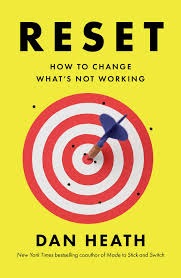
Reset: How to Change What’s Not Working by Dan Heath (1:12 of 6:17). I wanted to take a brief foray into self-help audiobooks. As soon as I read the description of Reset, I knew that it was a book that would be beneficial. I’m hoping to pick up some tips to help correct some broken systems in my personal and professional life.

January Stats

It’s time to look at the numbers. I’m actually very pleased with the reading that I got done in the first month of 2025.

  • Books read this month: 12
  • Highest rated: Kane and Abel by Jeffrey Archer (4.75 stars)
  • Lowest rated: Bridget Jones’s Diary by Helen Fielding (2 stars)

February is going to bring some unique challenges with it — specifically 2 trips and opera rehearsals beginning — but I’m hopeful that I will be able to maintain my process and make continued progress to my goal for 2025.

Leave a comment »

#12: Destiny and Power (Jon Meacham)

Pulitzer Prize winning author Jon Meacham has written a phenomenal biography of the 41st President of the United States in Destiny and Power: The American Odyssey of George Herbert Walker Bush. The book traces Bush’s life through its beginnings in New England, through his service in World War II, in the oil fields of west Texas, and throughout his political career. The final section of the biography focuses on Bush’s life post-presidency and gives special attention to his relationships with his sons George W. and Jeb.

I found the account insightful and humorous. I loved how notations from President Bush’s personal diary were scattered throughout the entire work, bringing a sense of  understanding and intimacy to the discussion. I was especially moved by the depiction of George H.W. Bush’s special relationship with his mother. The account of his final visit with Dorothy Bush before her death in the final days of his tenure as President was especially moving.

Mrs. Bush was breathing with difficulty, and Bush and his daughter [Doro] wept by her bedside. The president reached over and leafed through his mother’s “frayed Bible.” In its pages were notes that he had written her from Andover and a birthday card he had mailed her from the navy.

He held her hand, thinking of all the times she had lovingly rubbed his through the years. After a few hours he and Doro left for Washington. To Bush, the sight of his mother struggling to breathe put the rest of life in proper perspective. “I don’t know that Mum knows I’m President of the United States,” he told his diary, but “I do know that is not important anymore.” (p. 527)

As I realized that I was reaching the end of the biography, I began to wonder how I would adequately sum up the importance of this work. Bush 41 seems to be such an underrated, under appreciated leader by many. How could I possibly convey my feelings to my audience of readers? It seems as though Meacham recognized that his readers would need help in finding the right words to express the importance of George H.W. Bush. To help, he provided the following moment from an interview the author conducted with President Barack Obama reflecting upon his attitude toward the legacy of Bush 41.

. . .Bush, Obama thought, was “one of our most underrated Presidents,” and, in the middle of a late winter afternoon a quarter century after Bush left Washington, the incumbent president made the case for the Bush legacy.

“I would argue that he helped usher in the post-Cold War era in a way that gave the world its best opportunity for stability and peace and openness,” Obama said in the telephone interview from the White House. “The template he laid in a peaceful and unified Europe and in what for at least twenty-five years was a constructive relationship with Russia and the former Soviet satellites, and the trajectory away from nuclear brinksmanship at a time when things were still up in the air, was an extraordinary legacy.” As challenging as the world remained, “the one thing that we don’t have right now is any serious prospect of a great power war anywhere in the world,” Obama said. “Part of the reason for that is that I think George H.W. Bush did a really good job in managing that post-Cold War transition.” At home, Obama cited the Americans with Disabilities Act — something, Obama said, “that it’s hard to imagine a current Republican president initiating. . .So although President Bush was sometimes mocked for talking about ‘a thousand points of light,’ the fact is, even in his policies, there was a genuine conservative compassion there that manifested itself in working with Republicans and Democrats on the Hill to get some big things done.” (pp.599-600)

I highly recommend this biography for every American who is interested in the history and the challenges of the Office of the President. The men who have served and lead our nation from the Oval Office have shouldered immense burden as they attempted to make the lives of America’s citizens better. They all have had faults. Most have experienced success of some degree while in office. They all should be honored, respected, and thanked for their service — regardless of our political leanings.

Leave a comment »

#30: Mindset: The New Psychology of Success (Carol Dweck)

2017 ended with lots of illness for me, so I’m just getting around to writing my thoughts about the last book I read of the year. Fear not! I am slowly returning to a regular reading routine and will update you on my progress to reaching 2018’s goal of completing 32 books before the end of the year.

Mindset: The New Psychology of Success is a book that I recommend to all teachers, coaches, business leaders, and parents. Honestly, I think anyone who approaches Dweck’s book with an open mind will find themselves on its pages and see how a shift of personal mindset can potentially transform their life. I am certain that I will return to this work on a regular basis as I work with young adults and developing musicians.

The basic premise is rather simple. All of us choose one of two mindsets in every area of our life every day. We either buy into the fixed mindset — that tells us our abilities and intelligence are at their maximum level, unable to be changed — or we hold a growth mindset — that says that failures and mistakes are opportunities for improvement and learning. Sounds simple, huh? At its core, it really is just that simple. However, when we begin to examine how our mindset can be shaped by our environment and our perception of what is expected of us — as well as words spoken to us by parents, teachers, coaches, and employers — we realize that changing our mindset can be an enormous battle of the mind that has enormous implications.

When things didn’t go quite as planned — a test score is lower than you hoped, a friend misunderstood your words, or a performance was less than stellar — how do you respond? Was the outcome inevitable? Do things just happen sometimes? Do you buy into the mantra that “I gave it my best, so no one can ask for more”? These are the responses of the fixed mindset. A more-productive response found in the growth mindset would ask what lessons can be learned from these failures. What adjustments need to be made to my test preparation? Was a text the best method of communicating in this situation or would face-to-face conversation have reduced the possibility of a misunderstanding? Was my poor performance due to anxiety? How can I improve future performances? 

After reading Mindset by Carol Dweck, one question is at the forefront of my mind. Why is this work not being used as a required textbook in freshman experience courses in colleges and universities around the country? If our students can learn the power of recognizing the fixed mindset and how to adjust their thoughts to a growth mindset, their potential for success will increase exponentially!

Leave a comment »

#12: One Nation: What We Can All Do to Save America’s Future (Ben Carson)

Ever since reading Gifted Hands, I have been very impressed by Dr. Carson’s insight and common sense approach to all areas of life. What I found in One Nation is another example of an intelligent citizen speaking out about the things that are wrong with our country and the steps we can ALL take to correct them. I’m sure the book is not viewed favorably by many in the mainstream media, but I found Dr. Carson’s thoughts challenging, insightful, and firmly based in history as well as Scripture.

Several topics appear throughout the book. Most notably are Carson’s views on education, political bullies, and the health care abomination known as Obamacare. While expressing his opinions on the topics, Carson continually emphasizes the responsibility of the individual citizen to be well-informed about the important issues facing the nation. Part of his approach to understanding today’s world is through the examination of the past.  Carson states, “Many people find history boring and think that pop culture is much more relevant to citizens today. There certainly is nothing wrong with being up to date on the current social issues that affect our lives, but in order to have the proper perspective on current events, we need to know what happened in the past.” (Carson, 43) Success in life, according to Dr. Carson, stems from a solid education. By extension, a secure nation is maintained by an educated citizenry. It is only when we are informed that we are truly relevant. Notice this powerful passage from the chapter on “Being Informed”:

Today I frequently find myself reminding young people to expand their horizons of knowledge and not listen to those who tell them to limit their interests to things that are “culturally relevant.” I tell them that if you want to be relevant only in your household, then you only need to know the things that are important in your house, and if you want to be relevant in your neighborhood, you need to know what’s important in your neighborhood. The same thing applies to your city, state, and country. And if you want to be relevant to the entire world, program that computer known as your brain with all kinds of information from everywhere in order to prepare yourself. (Carson, 125)

Perhaps most interesting are Carson’s views on taxation and the health care system in our nation. Carson bases his approach to taxation on the Biblical principle of the tithe. (Throughout the book, Dr. Carson refers to Scripture as a foundation for many of his opinions and is especially fond of the book of Proverbs.) Just as the tithe is 10% of income with no regard for the individual’s wealth or poverty, Carson argues that an equal percentage paid in taxes ends the punishment of the wealthy while reinstating the dignity of the poor by allowing them to contribute from their means. Dr. Carson advocates the use of health savings accounts (HSA) that are created at the time of birth and receive an initial deposit from the government. Future deposits would be made by employers, charitable organizations, and the individual. As Dr. Carson explains, such a system — while not perfect — places much of the responsibility back in the hands of the patient while once again creating a free market in our nation’s health care. I have to admit that I find the concept very interesting.

Do I agree with everything Dr. Carson has presented? Certainly not. I do think that he has raised issues that are important to our national dialogue. It’s time that “we the people” once again begin discussing the issues and making sure our elected officials are aware of our wishes. After all, they are to be our representatives — not the puppet masters.  One Nation is an excellent book that will challenge you to think critically about America’s current situation and our hope for the future.

Leave a comment »

#1: Vertical Church (James MacDonald)

A new year has begun. In keeping with the tradition of the past few years, I decided to begin my year of reading with a Christian book.  Vertical Church is a challenging call written by the senior pastor of Harvest Bible Chapel.  Essentially, the book challenges churches to make sure that everything they do has honoring God as its focus rather than relationship building (referred to as horizontal by MacDonald).  The first 4 chapters deal with the Biblical support for the vertical approach to church while the remaining chapters focus on the primary pillars of the vertical approach — worship, preaching, evangelism, and prayer.

I think this is a must read for everyone working in church ministry.  It refocuses our attention to what is truly important in all of our efforts and points out how the horizontal will be taken care of when the vertical focus is central.  The reverse situation, however, is not true.  For many churches in the West, we have spent our efforts building human relationships that we have called “discipleship” while allowing our impassioned pursuit of God’s presence in our lives and services suffer. This call to change business as usual will definitely challenge your thinking and cause you to examine your own leadership model. While the book’s basic premise is very elementary (“God first”), the ideas are developed deeply and will give the most seasoned minister food for thought.

Leave a comment »

#22: Becoming a Person of Influence (John Maxwell)

My reading life slowed down considerably for the past month due to some illness following traveling with family. Now things seem to be getting back to normal and I'm finding a routine again.

My latest book was John Maxwell's Becoming a Person of Influence: How to Positively Impact the Lives of Others. Books related to leadership are not my normal fare, but I found myself a bit discouraged regarding my interactions with others in almost every area of my life. As I browsed the shelves, I stumbled on the book and was captivated by the possibilities immediately.

Written in simple language, Becoming a Person of Influence should be read by anyone who wants to make a positive impact in the lives of others. Whether you find yourself interacting with people in the board room, the classroom, or the sanctuary, this book can provide you with valuable insight into the impact you are currently making while offering realistic suggestions to begin improving your influence. I intentionally read the book rather slowly so I could digest the material and examine my own life. What I have discovered has provided correction in some areas and affirmation in others.

Personally, I struggle with having faith in other people. It's not easy for me to let go of a task that I can do better in a shorter amount of time. I tend to forget that people want to do something worth-while and that allowing them to do it (even when it's not how I would do it) allows them an opportunity to grow and develop their own skills. To conclude, here are two of my favorite passages from Maxwell's chapter on having faith in people.

“As you work to become a person of influence, always remember that your goal is not to get people to think more highly of you. It's to get them to think more highly of themselves. Have faith in them, and they will begin to do exactly that.” (Maxwell, p. 64)

“Not everyone has the natural ability to recognize past successes and draw confidence from them. Some people need help. If you can show others that they have done well in the past and help them see that their past victories have paved the way for future success, they'll be better able to move into action. Listing past successes helps others believe in themselves.” (Maxwell, p. 69)

Leave a comment »